
Fresh feeding is not all-or-nothing. Some families want a complete frozen meal. Others want to improve an existing bowl with a measured fresh addition. Both approaches can be intentional—as long as the food’s role is clear.
The shortest explanation
Carries a nutritional adequacy statement for a named life stage and is designed to provide the full daily diet when fed as directed.
Supports another food with flavor, moisture, protein variety, texture, or specific ingredients. It is not automatically a complete diet by itself.
The distinction is about intended use—not whether one product is “good” and the other is “bad.” A beautifully made topper can be excellent at its job. It simply has a different job.
Why toppers appeal to food-first families
A measured topper can make fresh food approachable. It can add moisture to a dry meal, bring in a new animal protein, offer whole-food ingredients, change texture, or encourage a selective dog to eat. It can also help a family begin thinking beyond a single processed format without changing everything overnight.
That is the part of integrative feeding we appreciate: small choices still count. Karen Becker, DVM and Rodney Habib have helped make incremental real-food upgrades approachable, while canine nutrition formulator Steve Brown has written specifically about improving a dry-food diet through carefully chosen fresh additions. You do not have to choose between an untouched bowl of kibble and a complicated homemade diet on day one.
When a little addition becomes a bigger nutritional decision
The more of the original complete food a topper replaces, the more its nutrient profile matters. A small flavor accent and half the bowl are not the same situation. Large, ongoing substitutions can change the overall balance of protein, fat, calcium, phosphorus, vitamins, minerals, and calories.
If a supplemental food is going to become a substantial or long-term part of the diet, use a properly formulated recipe or work with a qualified veterinary nutrition professional who understands the dog’s health and the ingredients being fed.
Complete does not mean “one format forever”
A complete-and-balanced diet can be frozen raw, air-dried, canned, cooked, freeze-dried, or dry. The label claim tells you about nutritional adequacy for the stated life stage; it does not require one particular texture or processing method.
Our preference is to look for recognizable ingredients and a clear purpose behind them. That reflects Judy Morgan, DVM’s emphasis on individualized whole-food plans; Steve Brown’s attention to balanced fats and formulation; and the evolutionary, protein-forward raw-feeding frameworks advanced by Dr. Conor Brady and veterinarian Ian Billinghurst. We value protein-centered recipes, useful moisture, thoughtful fats, and variety where they suit the dog. We also respect that budget, travel, storage, household safety, and medical needs influence what a sustainable routine looks like.
A note on perspective: These educators influence the questions we ask; this is not a claim of endorsement or universal veterinary consensus. AAFCO and FDA sources define the regulatory terms used here, while the fresh-feeding sources below provide philosophy and practical context.
How Goose’s Good Eats separates the roles
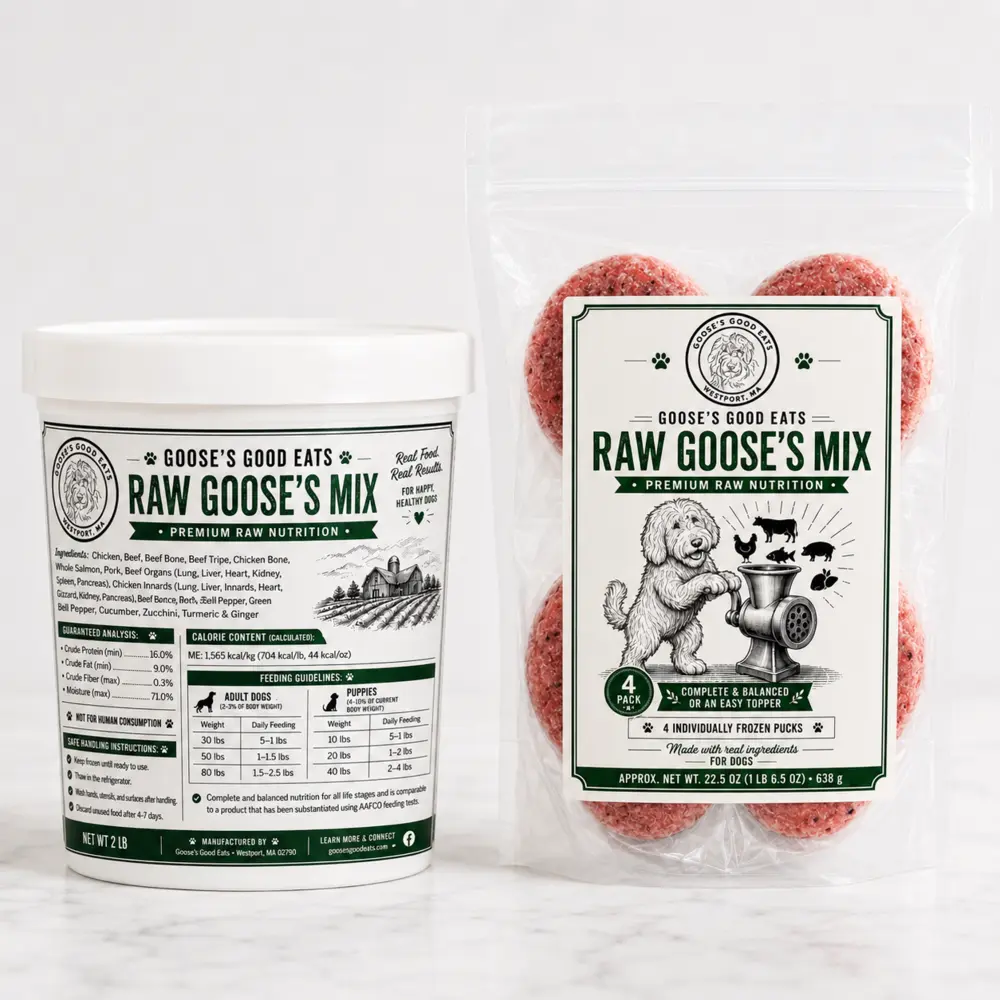
- Complete meals: Goose’s Mix, Surf & Turf Feast, Coast & Coop, and Air-Dried Surf & Turf Feast—always according to the life-stage statement on the current package.
- Supplemental and DIY foods: Beef 80-10-10 and Veal & Lamb Blend. These can support variety or a customized plan, but they are not automatically complete diets.
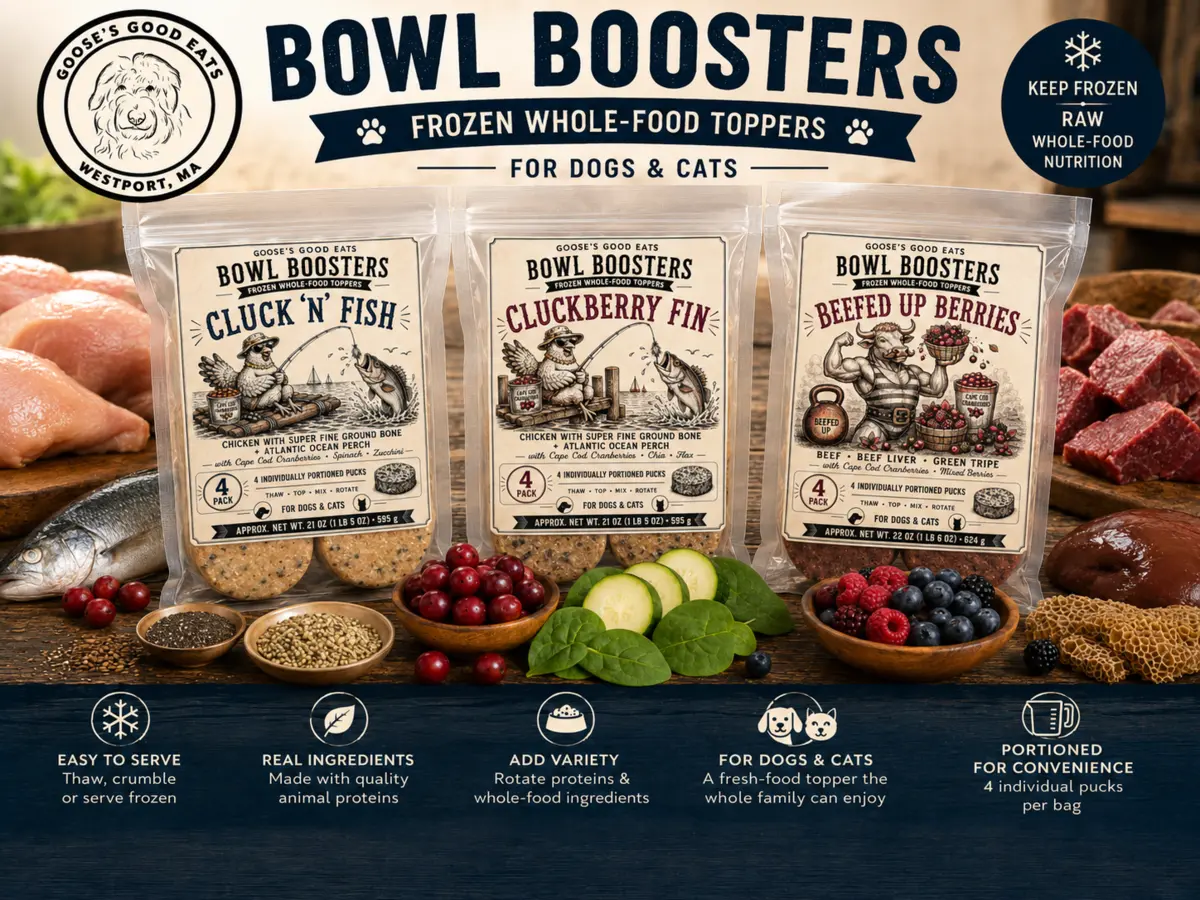
- Toppers and additions: Bowl Boosters and other add-ons designed to complement a properly balanced meal.
Three practical ways to build the bowl
- 01Feed a complete fresh meal
Choose a recipe appropriate for your dog’s life stage and portion it using its own calories and feeding directions.
- 02Replace part of the current food
Use the calorie content of both foods to reduce one as the other increases. Our calculator is designed for this approach.
- 03Add a modest fresh topper
Choose it for a reason—moisture, flavor, protein rotation, or whole-food variety—and count it within the daily intake.
The takeaway
A complete meal carries the nutritional responsibility for the whole diet. A topper plays a supporting role. Fresh food can belong in either position. What matters is choosing deliberately, reading the current label, and keeping portions connected to the dog’s total needs.